
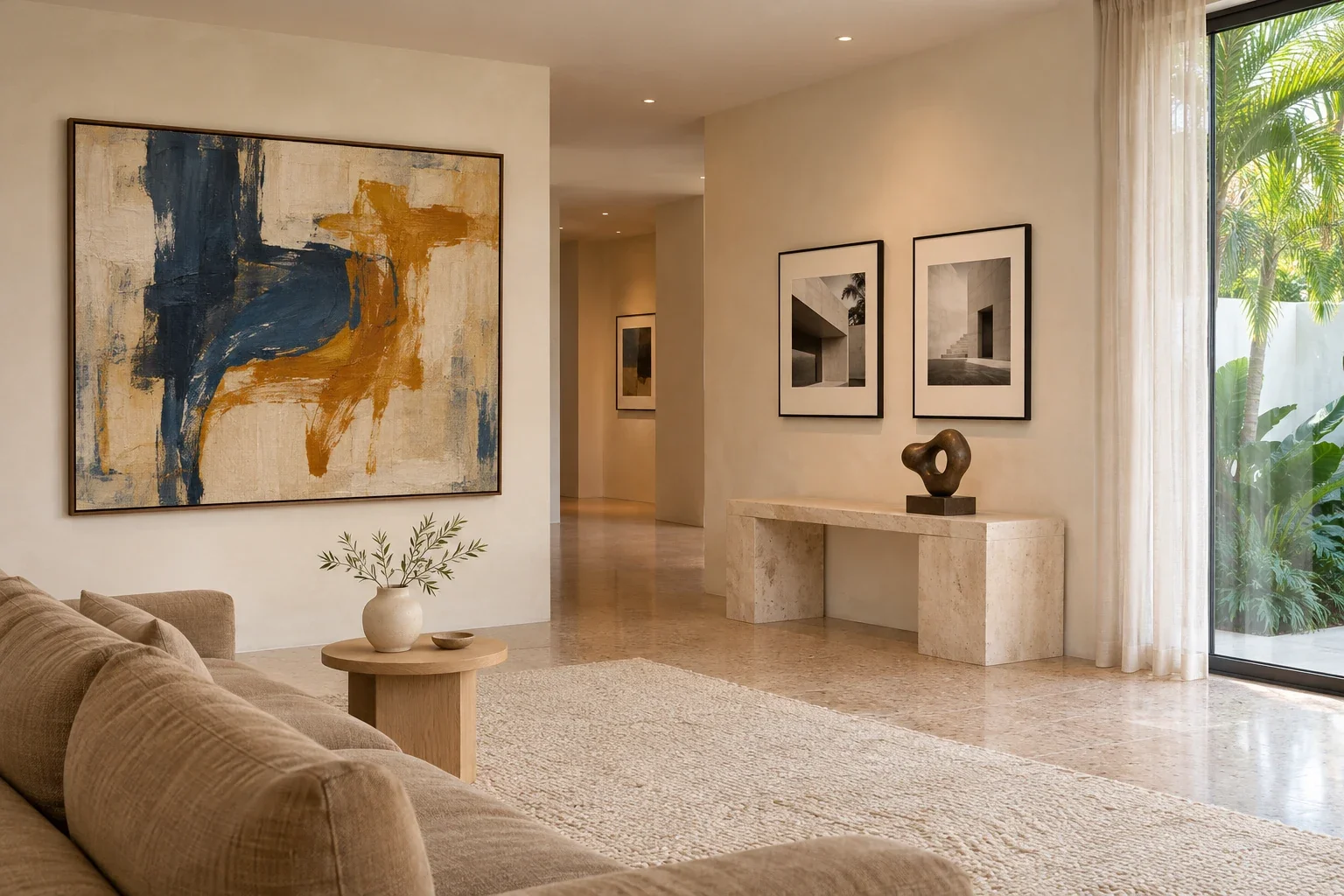
Designing a luxury Miami home around an existing art collection means planning walls, lighting, climate control and furniture to suit the art, rather than adding artwork at the end. The approach protects valuable pieces from sun and humidity and gives each work the space it deserves. Jessica Neilas Design plans placement during concept development and handles art hanging as part of white-glove installation through decor procurement.
Why Start the Design With the Art
When an art collection comes first, the home is shaped around it. Wall lengths, ceiling heights, window positions and lighting can all be planned to suit specific pieces, which is far easier during design than after construction. This approach is especially valuable in luxury residential interior design, where custom millwork, stone and lighting are already being detailed.
Miami's collector culture makes this conversation common. Each December, Art Basel Miami Beach draws collectors from around the world, and many South Florida owners arrive with works acquired across years of travel. A home designed around that collection feels personal and composed, rather than decorated, and is easier to live in day to day, a balance we also explore in our guide to waterfront home interior design.
Begin With a Collection Inventory
Before any layout is drawn, list every piece you plan to display. Include dimensions, weight, medium, framing and any special requirements, and note which works you consider most important. Bring this inventory to your interior design consultation so placement can be discussed alongside layout, finishes and lighting.
- Size and weight determine wall locations and the hanging hardware and blocking needed, which are documented in the construction drawings.
- Medium affects light and climate sensitivity; works on paper, photographs and textiles typically need more protection than oil on canvas or stone, a factor in material and finish planning.
- Sculpture and objects require plinths, niches or tables that can carry their weight, which can be designed as part of custom millwork and furnishings.
- Future acquisitions deserve space too, so leave flexible walls in the space plan.
Planning Walls, Sightlines and Scale
Great art needs uninterrupted wall space. Early in the architectural plan review, identify the walls that can host major works and keep them clear of switches, thermostats, vents and doors. A long gallery wall in an entry or a tall wall in a double-height living room can become the home's defining moment.
Sightlines matter as much as walls. Think about what you see when you enter, from the sofa, from the dining table and from the primary bedroom. The most important work in the collection usually belongs on the main axis of arrival, where it sets the tone for the home, as shown in projects throughout the studio's portfolio.
Scale should feel intentional. A large canvas needs enough distance for proper viewing, while smaller works can be grouped into a considered arrangement. Photorealistic renderings are an ideal way to test placement before anything is hung, and our guide to reviewing 3D interior renderings explains what to look for.
Lighting Artwork Without Damaging It
Light makes art visible, but it can also cause fading and deterioration over time. Plan accent lighting for key walls, with adjustable fixtures that can be re-aimed as the collection changes, and specify warm, high-quality light that renders colour accurately. Wellness-focused lighting concepts are part of the studio's concept development, and art lighting can be layered into that plan.
Daylight is the larger concern in Miami. Strong sun through floor-to-ceiling glass can fade pigments, paper and textiles. Position light-sensitive works away from direct sun, and consider UV-filtering window film, sheers or motorized shades, which also support the sun control described on the luxury residential design page.
Humidity, Salt Air and Climate Control
South Florida's humidity is one of the biggest threats to an art collection. Rapid swings in humidity can cause canvas to slacken, wood panels to move and paper to cockle, while salt air near the ocean can affect metal frames and sculpture. Many conservators recommend keeping relative humidity steady at a moderate level, so discuss climate control with your mechanical engineer and contractor during construction administration.
- Avoid exterior walls and wet rooms for sensitive works, as recommended in our waterfront home guide.
- Keep art away from supply vents and direct air flow, a detail coordinated through construction drawings.
- Plan dehumidification for closed-up second homes, a common concern explored in our remote second home design article.
- Store rotating works in a climate-controlled room, or arrange climate-controlled storage during construction through procurement and logistics.
Hurricane Preparedness for Collectors
Hurricane season runs from June through November, and collectors should have a plan before a storm approaches. Know which works can stay on the wall, which should be moved to an interior room, and who will handle them if you are away. Hurricane-ready details are part of the studio's residential approach, and discussing art protection early helps shape the home's layout and storage.
Secure hanging systems, interior storage rooms without windows and a current inventory with photographs all make preparation easier. For owners of Miami penthouses and waterfront homes, building rules and evacuation plans should be reviewed with this in mind.
Furniture, Finishes and Colour Around Art
Interiors designed around art usually rely on a restrained backdrop. Warm neutrals, natural stone and textured plaster allow colour and form in the artwork to lead, while furniture should be scaled so it does not crowd the pieces above or beside it. The studio's concept and material palettes are developed with the collection in view.
Reflective surfaces need care. Glass, lacquer and polished stone can reflect windows or lights onto glazed works, so check angles in renderings and on site. Custom pieces, such as consoles, plinths and display millwork, can be designed to frame specific works, and the studio's residential services include custom furnishings and bespoke millwork.
Room-by-Room Ideas for Displaying Art
Each room offers different opportunities and constraints. Thinking room by room helps match works to the light, humidity and daily activity of each space, and it gives the studio clear direction when preparing the furniture layouts and renderings.
| Room | Display Ideas |
|---|---|
| Entry and gallery halls | Display major works where guests will see them on arrival, with dedicated accent lighting and wall blocking planned in the construction drawings. |
| Living rooms | Hang large canvases above seating and choose sofas sized to give the art enough space, as discussed in our penthouse furnishing guide. |
| Dining rooms | Choose works that reward longer viewing and keep them clear of steam and spills from serving areas, a detail resolved in space planning. |
| Primary bedrooms | Display calmer, more personal works away from bright morning sun on east-facing walls, as reviewed in 3D renderings. |
| Kitchens and bathrooms | Choose durable works, such as stone or ceramic sculpture, to account for humidity and cleaning, a point covered in our condo renovation guide. |
| Terraces and outdoor rooms | Display only works designed for exterior conditions, guided by the studio's exterior and landscape advisory. |
Rotating works seasonally keeps a collection fresh and limits light exposure for sensitive pieces. Designing a few flexible walls with adjustable lighting makes rotation simple, and it keeps the home feeling current without changing the interior design concept.
Working With Your Art Consultant and Installers
Many collectors work with an art advisor, conservator or specialist art handlers, and the best results come when they are part of the design conversation early. Share your inventory, lighting goals and climate requirements with the full team, and coordinate schedules so artwork arrives after dust-producing work is complete, which construction administration helps manage.
Jessica Neilas Design sources art alongside furniture, lighting and accessories, inspects items at receiving and includes art hanging in white-glove installation. On installation day, everything arrives together and is placed, styled and photographed, as described on the decor procurement page.
Documenting the Collection Within the Design
Once placement is approved, record it. A simple art plan showing each work, its wall, hanging height and lighting makes installation precise and helps if pieces are moved for storms, travel or conservation. Hanging heights are commonly set so the centre of the work sits near average eye level, but larger pieces and seating areas may call for adjustments. Including these details in the project documentation, alongside the construction drawings, gives installers, insurers and future designers a clear reference for how the collection lives in the home.
Art in Hospitality and Commercial Spaces
Art also shapes commercial interiors. Hotels use art to tell a brand story in lobbies and guest rooms, and offices use it to express culture in reception areas and meeting rooms. Our guides to boutique hotel guest room design and private meeting rooms for open-plan offices show how artwork can support privacy, comfort and identity, alongside the studio's hospitality design services.
Design Around Your Collection With Jessica Neilas Design
Jessica Neilas, B.Des, is a renowned, award-winning interior designer with more than 20 years of experience and 100+ completed projects, including residences in Bal Harbour, Miami and Naples. Her studio collaborates with leading architects to create homes where materiality, proportion and craftsmanship support the way clients live, as recognized on the studio's media page.
Book a consultation to plan a home around your collection, or learn whether online or full-service design is the right fit for your project.
